This is the final cut of our film opening The Journey, a social realist indie production following an abusive professional tennis player who must rebuild himself and his life after he suffers brain damage in a car accident. Taking influence form social realists such as Paddy Considine's Journeyman and Tyrannosaur, and older films like My Beautiful Laundrette and Withnail and I. Our primary target audience is males aged 18-25, and females of the same age being our secondary target audience. We would hope for a BBFC rating of 15 to allow for a larger audience, but it is likely that it would be pushed to an 18 (like This is England, Sweet Sixteen and Tyrannosaur). Changes since the last rough cut: the audio has been levelled, and more ambient sound has been added The idents were also added
Sound:
different cars driving by sound effect
using the volume levels to keep it even
foley sound of panting
camera whir sound removed
dog barking sound added more successfully
dialogue at the end matches with the visuals, and the "good afternoon" was cut for verisimilitude
music in the car volume has been fixed
dialogue audio is quieter now
the phone ringing is also quieter and less jarring now
audio fade at end
Titles:
there was a wonky title at the start, that has now been fixed
the film title has been put after the car crash before the light flare - look better. Also made longer so looks less like an inter-title
Editing:
more match cuts in the first cross-cut scene, this adds more meaning to the scene, showing the connection between the 2 characters
trims were made so that it is closer to the 2 minute mark
reactions to the news he will not play tennis again are shown
How does your product engage with audiences and how would it be distributed as a real media text? ... What I cover in this post:
Different ways films can engage with audiences
Uses and Gratifications theory (applied to 2 case studies, Tyrannosaur and Jurassic Park)
Stuart Hall's theory of readings
Intertextuality
how different films achieve distribution
Our target audience (and how we target them)
different types of distribution (conglomerates vs. indies)
digitisation, disruption and convergence
Web 2.0
How we would distribute our film
... Creative use of technologies: This is my creative input, the points covered are:
how different films achieve distribution
conglomerates vs. indies
different types of distribution (wide release, self-distribution, film festivals, digital, theatrical)
how budget/funding affects distribution (government agency finding/subsidy vs conglomerates, cultural value)
For creative use of technologies I recreated an episode of the game show "Who Wants to be a Millionaire?", where I appear on a celebrity edition as the director of an upcoming indie film The Journey.
Web 2.0 Web 2.0 describes how the internet has become driven by users, converging the line between producer and consumer. An example of this is user-generated content, like the fan-art that was made for the Cornetto Trilogy, or the poster for Hinterland which was also fan-made. This web 2.0 theoretically allow indies more of a chance at achieving successful distribution online, by setting up twitters, instagrams and being able to engage with audiences directly. We did this through our Instagram page, and the different software/online resources which we used throughout, shown in this vodcast (also used in the evaluation question 4): ... OUR TARGET AUDIENCE Gender/Age Primary target audience: males, 18-25 Secondary target audience: females, 18-25 Initially we wanted our film to be a 12+, but we did some research on the BBFC ...
... Because nearly every indie social realist film we looked at received an 18 or 15 rating, we would hope for a 15+, but it is likely that our production would also be pushed to an 18. To put this into some context, these are some of the rating Big Six/Subsidiaries received:
... As the main character is male, uses and gratification theory would suggests that a primarily male target audience would be interested in this film as they would either identify with the protagonist, or aspire to be like him. The other central character is his partner, Cathy, and she is a significant enough character to draw in a secondary female target audience. Ethnicity We have an ethnically diverse cast (Caucasian, Chinese, Indian), and as caucasian is the hegemonic demographic targeted, we wanted to both represent and target multiple ethnicities. This is something we found to be conventional of the social realist genre (My Beautiful Laundrette, Slumdog Millionaire), and helps to widen our target audience. Sexuality Initially we wanted to have non-heteronormative representation (taking influence form My Beautiful Laundrette), with the protagonist, Tanay, being with another man, but due to casting issues and a need to film we had to scrap this idea and include heteronormative representation.
... 2B How might it achieve distribution?
"Film distribution is the process of making a film available for viewing by an audience. This is normally the task of a professional film distributor, who would determine the marketing strategy for a film, the media by which a film is to be exhibited or made available for viewing, and who may set the release date."
(Wikipedia) Some of the different types of distribution:
Theatrical
Television
Personal home viewing (DVDs, Video on Demand, Download e.g. iTunes)
... The Big Six/Big Five: Although this is debated (Disney recently sealed the deal with 20th Century Fox now owning it, but Lionsgate is sometimes included) the Big Six are all present in the top 10 distributors of 2018 list. They are the largest conglomerates of the film industry in both production and distribution.
Buena Vista (Walt Disney)
Warner Bros.
Universal
Sony/Columbia
20th Century Fox
Paramount
top 10 distributors of 2018
Their films typically use the tentpole model (costing more then $100m), and the majority of their films are extremely commercially successful - you can see that collectively they own about 80% of the market in shares.
Wired episode with Ryan Reynolds
Marketing campaigns are often extremely expensive, and the star names which usually feature in their films are a large part of this (star billing): trailers are made for national and international audiences, cast and directors appear on chat shows, but cheaper more inventive methods are also used by conglomerates similar to indies. Youtube videos, with cast members are often a popular way of raising awareness of a star featuring in a upcoming film: for example Ryan Reynolds appeared in an episode of Wired a little before Deadpool 2 started being talked about .In the game celebrities see the web's most searched questions about them - these videos are cheap to make and don't take much time to produce/consume. ... Indies: Indie companies like Warp don't even make it near the top 10 lists when it comes to distribution, but there are ways they achieve distribution:
Arthouse cinemas
Direct to Itunes
Direct to stream
Straight to DVD
Self-distribution (e.g. through social media)
The main reason indie films often don't even get a wide release or even a theatrical release is due to budgets being too small. Even though the BFI offers out grants to many indie films for production and distribution, it is difficult to generate interest in small budget films when films like Black Panther, with extensive SFX and large action sequences, are also showing in the cinema.
Some other reasons though may be more to do with the actual content of the films: controversial topics that may include darker themes are not as commercially viable as films do not have political or controversial themes, making it difficult to generate interest in a film, drawing in only niche audiences.
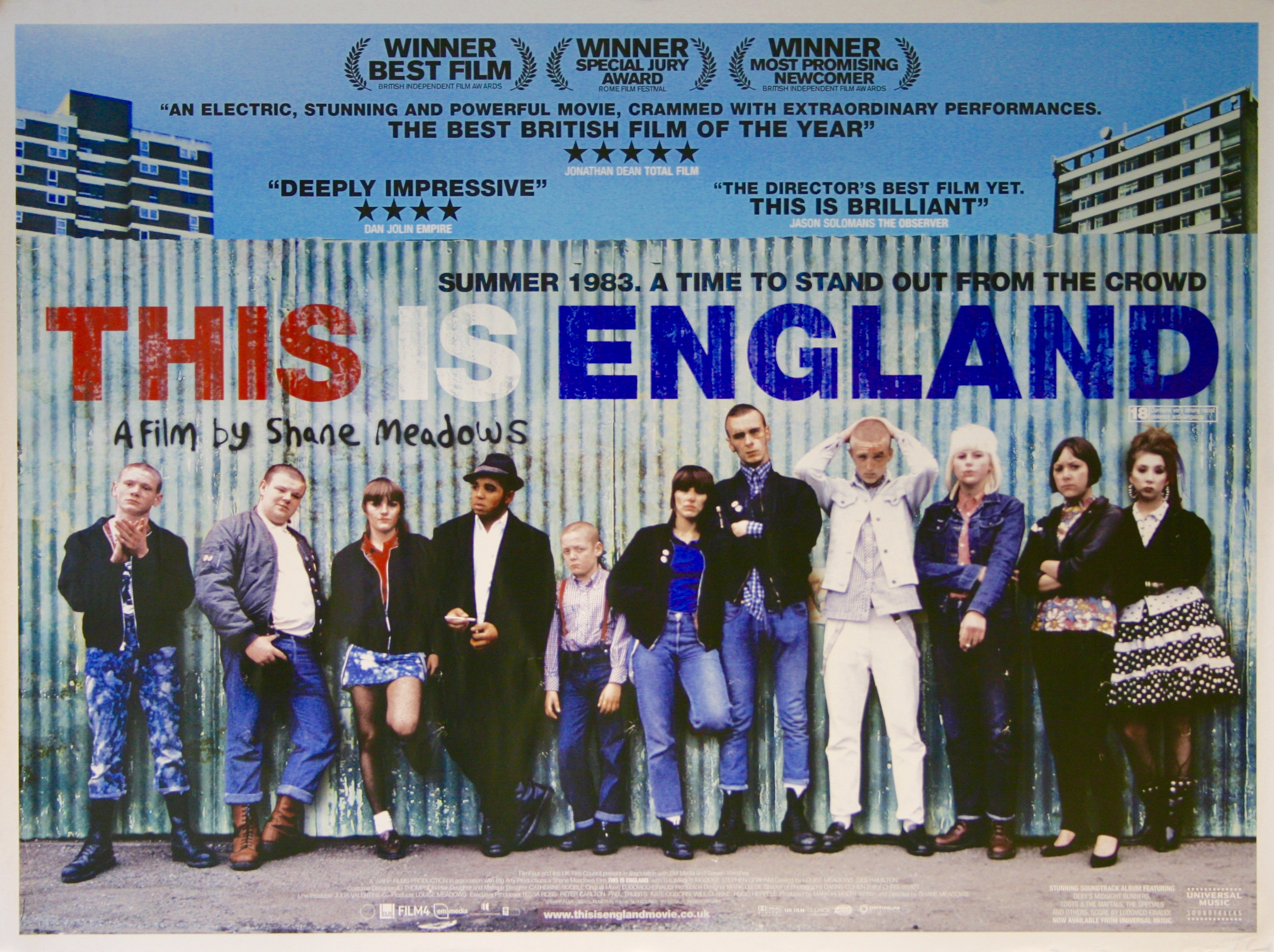
This is England - an example
This is England takes the point of view of a young boy who joins the skinheads in the 80s. There is cussing throughout (C-word and F-bombs), and the climax involves a violent race-based assault. Although the message of this film is condemning this kind of violence, the brutality of it would be too difficult for a 4 quadrant audience to digest.
... Digitisation, Disruption and Convergence:
As technology is constantly advancing, production, distribution and exhibition are becoming increasingly cheaper and more accessible to more people - expensive reels no longer have to be bought to make films, and even our production has been made digitally.
This allows films with micro-budgets to have a greater chance at distribution - Le Donk and Scor-Zay-Zee is an example of this, with a micro budget it still managed to have a theatrical trailer and then a straight to DVD release. Professional equipment used was extremely limited. An example which took it even further is Hinterland, which had a budget of only £10k, filmed using a 15 year old camera and then released in indie cinemas with director Q+A sessions. The film was never released on DVD, but given a simultaneous release on iTunes. The film definitely achieved some successful distribution, as it made it onto a top indie films of the year list. As it is so easy now for anyone to make their own films relatively inexpensively and self-distribute them, the term convergence is used to reference this: the line between producer and consumer is blurring as cheaper technology becomes available. The importance of Netflix and Amazon Prime in this disruption cannot be overlooked, as they offer films directly to audiences, without theatrical releases, and are still massively successful. This threatens theatres, as if people are able to watch Oscar winning films such as Roma at home on Netflix, there will become increasingly less need/want for people to go to cinemas. Although this disrupts conglomerates, it can be beneficial for indies, who are able to market and sell their films completely online, like the example of Hinterland, which did have a mall theatre run, but the majority of its marketing was one online through twitter. ... How we would distribute our film:
Self-distribution would be a good method for the distribution of our film for some of the following reasons:
Do not have the budget for a theatrical release
No star billing
Digitisation has made it easier for creators to use innovative methods to cheaply promote their films
Darker themes as possibility for a high age rating significantly lower audience interest, making it more of a niche audience film
As we have a micro-budget for our production, it is unlikely that a large distribution company would be willing to help distribute our film. Due to the accessibility of social media however, getting in touch with a film festival has been shown to be possible, which would get the film viewed by critics and journalists who could generate discussion of the film in the press. We created twitter and instagram pages to promote our film, similar to Hinterland or the Cornetto trilogy, and the example of Coz Greenhop showed how successful a method this can be in generating interest in a film.
Making deals with arthouse cinemas to do director Q+A sessions which would be mutually beneficial, accompanied by a simultaneous Video on Demand/iTunes/digital release of the film has shown to be a successful method in promoting a film and achieving distribution (Wandering Rose, and Hinterland).
... (SAM'S WORK) ... ... This is Sam's online job interview covering the same topic ...
The Big Six conglomerates of the film industry have managed to almost monopolize the market, as most of their films target a 4 quadrant audience.
In the last 8 years, almost every single highest grossing film of the year was produced by one of the Big Six, and didn't have a BBFC rating above 12.
Because they use the tentpole strategy (their films cost $100m+) there is a massive financial risk, as if only a few of their films are flops, their entire company fails.
Conglomerates therefore tackle a 4 quadrant audience Indies
Indie films have less of a financial risk when making their films, as not only are budgets lower, so they do not have to make as much money to make profits, but they also receive government funding in the form of grants, which they do not have to pay back
Because they do not use the tentpole strategy, they can make films which appeal to niche, or smaller audiences
The most expensive Warp film was still only £8.1m ('71)
But, audiences still get missed out on because they do not have the budget to market their films
The BBFC plays a big role in this issue
Indie films can therefore target niche audiences with their films, as they are not usually such big financial risks. ...
Withnail and I is a 1980's British black comedy/social realist cult film. Set in the 60's, very effectively, with the actor portraying the protagonist having stated "Its provenance is from a different era. None of the production values, none of the iconography, none of the style remotely has it down as an 80's picture". the plot follows two unemployed and unemployable actors, Withnail and "I" (played by Richard E. Grant and Paul McGann, respectively) who share a flat in Camden Town in 1969. Deciding to take a holiday, they visit Withnail's uncle Monty for a key to his house in the countryside, but plagued by alcoholism, drug abuse and constant rain, their 'break' is far from relaxing. (Wikipedia) OUR INFLUENCES
The use of somber incidental music to set the tone and signify an older target audience (also conventional of indie)
Use of set dressing for character exposition (though not to show poverty or lack of up-keep)
shown through panning shots as music plays
White serif font of the titles to signify social realist
low-key lighting (showing both the low budget and realism)
Morally ambiguous characters that do not fit neatly into a single Proppian archetype (the protagonist of our story is both the hero and an antagonist/villain)
...
PRODUCTION CONTEXT/HISTORY Budget: £1.1m Box office: UK £600k; US $1.5m Rotten Tomatoes: 94% BBFC: 18
The author of the unpublished novel was paid by an oil heir, Moderick Schreiber, to turn the manuscript into a screenplay, and on its completion Paul Heller (producer) convinced Schieber to direct it after he had found funding for half of the film. George Harrison (of The Beatles) then agreed to fund the rest of it through his company HandMade Films. The film was nearly shut down 3 days into filming by Denis O'Brien who was overseeing the film on behalf of HandMade Films, as the film had no "discernible jokes". In total the film cost £1.1m, although £30k was invested by the author to film scenes which the company refused to fund which he was never reimbursed for. This film is a good example of the amount of artistic freedom indie productions have in contrast to studio films, as they have diverse and complex representations which were not so commercially viable in the 80's, and still are not today - although this film received no government funding through the BFI/UKFC, grants or TV station funding, theses are all very typical for indie productions as they exist to ensure wider representations.
This indie/low budget is reflected in the film
mostly shot on site, although none of the filming was done in Penrith, they were locations near Shap and Bampton
there is no CGI or SFX used
the image quality is often grainy, unlike how it would be for a Big Sixproduction - this is probably because of the cheap digital transfer which is more typical of indie films, contrasting completely with studio productions of the same period such as Star Wars, with multi-million dollar upratings overseen by George Lukas
On BoxofficeMojo and The Numbers there is very little information about domestic and international gross (number of territories, US, China), though the film did get theatrical release in the UK
the film isn't extremely popular outside of the UK - mostly because it is too "English" and International audiences are unable to identify with many aspects of it, but also because it's success wasn't expected
It is also more common that indies do not have non-domestic release, though auteurs such as Ken Loach, Mike Leigh and sometimes Shane Meadows are exceptions form this as their names are more marketable
Daniel Day-Lewis (who was in My Beautiful Laundrette) was considered fro the role of Withnail, but it was ultimately given to an unknown actor (also reflective of indie)
The trailer, similar to My Beautiful Laundrette, aims to portray the film as more of a comedy than a depressing social realist (although the film is a dark comedy)
in 1999 the BFI voted the film as the 29th greatest British film of all time, and in 2017 Time Outmagazine ranked it as 15th best ever
Re-issues and re-masterings have been released since the film came out, continually making money
Editionalising - commercial movies are often re-released in box sets, special editions, genre boxsets - even Shane Meadows has boxsets
Withnail and I 20th anniversary 3 disc special edition on Amazon
... TITLES
the simple white serif font is typical of the social realist genre, similar to '71 and Tyrannosaur
There aren't many extra words like "starring" "with" "introducing"
sets the mood - depressing, mellow - completely contrast with something you might expect to find in a horror film (e.g. the drums and high pitched strings in Bride of Chucky - this clearly reflects the genre), this is more like the incidental acoustic music of Tyrannosaur
also signifies the target audience (not teen, older - also reflected in BBFC rating of 18)
Ambient sound of the kettle and walking is heard as the song comes to an end
some of the sound mixing is very poor - as actors walk towards the camera their voices become a lot louder, and are difficult to hear when far away
this is representative of the budget/technology available at the time
... FIRST SHOT
fade form black, slow zoom, medium shot to close-up, hand-held
Naturalistic lighting, low-key
make it look cramped, dark
also reflective of the low budget into context
Dusty dark wooden cupboard and dark brown lamp
connotes poverty, lack of care
all the dark colours make it seem claustrophobic, oppressive, gloomy and depressing
Clothing is simple, practical, dull colours
masculine
inexpensive
representative of target audience (mature), more through identfication than aspiration though
The film title is seen in the first shot, which isn't extremely conventional of the films we've looked at, and is not distinguishable form the rest of the credits there than the slightly larger font
... PROTAGONIST AND NARRATIVE
"I"
overgrown 'shaggy' hair and beard
unkempt
lack of upkeep
does not need to look presentable/professional for an office job
Glasses and cigarette
make him look intellectual
troubled artist look
'suffocating' in the apartment
introverted and bookish look, but also pretentious
When he goes to the cafe for food there are close-up shots of headlines, unappealing looking food and an ageing woman eating a greasy egg sandwich, the camera cuts to a close-up of the protagonist's eyes
they are slightly red with massive bags underneath them
he looks tired, depressed
The voice over is very cynical, but comedic
is used for exposition
his criticism of mundane daily life, but also detachment from it (he "feels sorry" for people because they have to wake up to depressing headlines everyday without marking that he himself does exactly that) creates narrative enigma, but also emphasises the gritty and negative light that the film is shown through (as it is all form this character's point of view)
Propp:
The Hero: "I" is signified to be the 'hero' of this film as the camera repeatedly cuts back to show his reactions, and he is the only character we are offered insight into through the voiceover
The Donor: Withnail's Uncle Monty is definitely the Donor of the story, giving them the key to his house in the Lake District
The Princess: the princess could be "I" desired career as an actor, or it could be Withnail as there are a lot of homoerotic undertones (in a scene they refer to each other as "lover", and at a bar "I" is threatened by an irishman and called a "poof" - a derogatory term)
The Villain: Withnail is the villain, as he is one of the obstacles blocking "I" from succeeding in his career, is more active in creating conflict (with both a local farmer, a drug dealer and a policeman), however there is also recognition of "I"s own involvement in a lot of theses situations.
The Helper: it's impossible to avoid the fact that the apparent protagonist has no name in this film, and Withnail's narcissistic tendencies clearly show that he perceives himself to be the protagonist of his own life, and he views "I" as his Helper/sidekick. Although "I" is the one who proposes going on holiday
The Dispatcher: "I" is undoubtedly his own dispatcher, sending himself to the Lake District, but also deciding to leave Withnail to his alcohol and drug addiction to work on his own career at the end of the film
As there are so few characters in the film there are a lot of overlaps between the propping archetypes, which is also reflective of the realistic and complex representation of the social realist genre
...
MISE-EN-SCENE
the first shot is followed by a panning shot of the apartment, lots of set dressing has been done
wine bottles, mess, dirty clothes
everything looks dusty or dirty
the walls look grimy
used cups lying around
a British flag is hung carelessly from a chair - shows lack of patriotism, and England isn't painted in the best light throughout the film
As the camera moves into the kitchen the protagonist re-enters the shot to fill up the kettle and you see the real extent of the mess
the sink is full to the brim, empty and full milk bottles are thrown on top of drying racks loaded with plates and a curtain over the window looks to be on its last leg
The curtain pattern is good for verisimilitude, as the film is set in the 60's and it is a stereotypical pattern style of the decade
All the furniture is clearly very fine
glass cabinets, wooden chairs, a grand dining table, leather sofa
but all clearly uncared for, maybe even second hand, all mismatching
... OTHER POINTS
There were some issues that probably wouldn't have happened were the film a high budget studio production
the author "forced" Grant, the actor playing "I", to binge drink so he could more realistically portray the character, although in real life he was Teetotal and had a health condition which prevented him from being able to process alcohol, so he was violently sick
The original ending saw Withnail killing himself by pouring wine into a shot gun and firing it whilst drinking form it, but it was deemed 'too dark'
the film is already too grim to be considered by a conglomerate, and the low(ish) budget does mean that theres is less pressure to make a profit
the involvement of HandMade Films is what really prevented this
demonstrates the amount of freedom low-budget index have in contrast to subsidiaries/conglomerates who use the tentpole format