Showing posts with label Working Title. Show all posts

Friday, 5 April 2019

EVALUATION QUESTION 2 audiences and distribution

How does your product engage with audiences and how would it be distributed as a real media text?


...

What I cover in this post:
  • Different ways films can engage with audiences
  • Uses and Gratifications theory (applied to 2 case studies, Tyrannosaur and Jurassic Park)
  • Stuart Hall's theory of readings
  • Intertextuality
  • how different films achieve distribution
  • Our target audience (and how we target them)
  • different types of distribution (conglomerates vs. indies)
  • digitisation, disruption and convergence
  • Web 2.0
  • How we would distribute our film
...
Creative use of technologies:

This is my creative input, the points covered are:
  • how different films achieve distribution
  • conglomerates vs. indies
  • different types of distribution (wide release, self-distribution, film festivals, digital, theatrical)
  • how budget/funding affects distribution (government agency finding/subsidy vs conglomerates, cultural value)

For creative use of technologies I recreated an episode of the game show "Who Wants to be a Millionaire?", where I appear on a celebrity edition as the director of an upcoming indie film The Journey.

...
2A How does it engage with audiences?

...


Web 2.0
Web 2.0 describes how the internet has become driven by users, converging the line between producer and consumer. An example of this is user-generated content, like the fan-art that was made for the Cornetto Trilogy, or the poster for Hinterland which was also fan-made. This web 2.0 theoretically allow indies more of a chance at achieving successful distribution online, by setting up twitters, instagrams and being able to engage with audiences directly.
We did this through our Instagram page, and the different software/online resources which we used throughout, shown in this vodcast (also used in the evaluation question 4):


...

OUR TARGET AUDIENCE

Gender/Age
Primary target audience: males, 18-25
Secondary target audience: females, 18-25

Initially we wanted our film to be a 12+, but we did some research on the BBFC
...


...
Because nearly every indie social realist film we looked at received an 18 or 15 rating, we would hope for a 15+, but it is likely that our production would also be pushed to an 18.

To put this into some context, these are some of the rating Big Six/Subsidiaries received:


...

As the main character is male, uses and gratification theory would suggests that a primarily male target audience would be interested in this film as they would either identify with the protagonist, or aspire to be like him.

The other central character is his partner, Cathy, and she is a significant enough character to draw in a secondary female target audience.

Ethnicity
We have an ethnically diverse cast (Caucasian, Chinese, Indian), and as caucasian is the hegemonic demographic targeted, we wanted to both represent and target multiple ethnicities. This is something we found to be conventional of the social realist genre (My Beautiful Laundrette, Slumdog Millionaire), and helps to widen our target audience.

Sexuality

Initially we wanted to have non-heteronormative representation (taking influence form My Beautiful Laundrette), with the protagonist, Tanay, being with another man, but due to casting issues and a need to film we had to scrap this idea and include heteronormative representation.

...

2B How might it achieve distribution?


"Film distribution is the process of making a film available for viewing by an audience. This is normally the task of a professional film distributor, who would determine the marketing strategy for a film, the media by which a film is to be exhibited or made available for viewing, and who may set the release date."

(Wikipedia)

Some of the different types of distribution:
  • Theatrical
  • Television
  • Personal home viewing (DVDs, Video on Demand, Download e.g. iTunes)
  • Self-Distribution

...

...

The Big Six/Big Five:
Although this is debated (Disney recently sealed the deal with 20th Century Fox now owning it, but Lionsgate is sometimes included) the Big Six are all present in the top 10 distributors of 2018 list. They are the largest conglomerates of the film industry in both production and distribution.

  • Buena Vista (Walt Disney)
  • Warner Bros.
  • Universal
  • Sony/Columbia
  • 20th Century Fox
  • Paramount


top 10 distributors of 2018
Their films typically use the tentpole model (costing more then $100m), and the majority of their films are extremely commercially successful - you can see that collectively they own about 80% of the market in shares.


Wired episode with Ryan Reynolds
Marketing campaigns are often extremely expensive, and the star names which usually feature in their films are a large part of this (star billing): trailers are made for national and international audiences, cast and directors appear on chat shows, but cheaper more inventive methods are also used by conglomerates similar to indies. Youtube videos, with cast members are often a popular way of raising awareness of a star featuring in a upcoming film: for example Ryan Reynolds appeared in an episode of Wired a little before Deadpool 2 started being talked about .In the game celebrities see the web's most searched questions about them - these videos are cheap to make and don't take much time to produce/consume.
...


Indies:
Indie companies like Warp don't even make it near the top 10 lists when it comes to distribution, but there are ways they achieve distribution:

  • Arthouse cinemas
  • Direct to Itunes
  • Direct to stream
  • Straight to DVD
  • Self-distribution (e.g. through social media)
The main reason indie films often don't even get a wide release or even a theatrical release is due to budgets being too small. Even though the BFI offers out grants to many indie films for production and distribution, it is difficult to generate interest in small budget films when films like Black Panther, with extensive SFX and large action sequences, are also showing in the cinema.

Some other reasons though may be more to do with the actual content of the films: controversial topics that may include darker themes are not as commercially viable as films do not have political or controversial themes, making it difficult to generate interest in a film, drawing in only niche audiences.
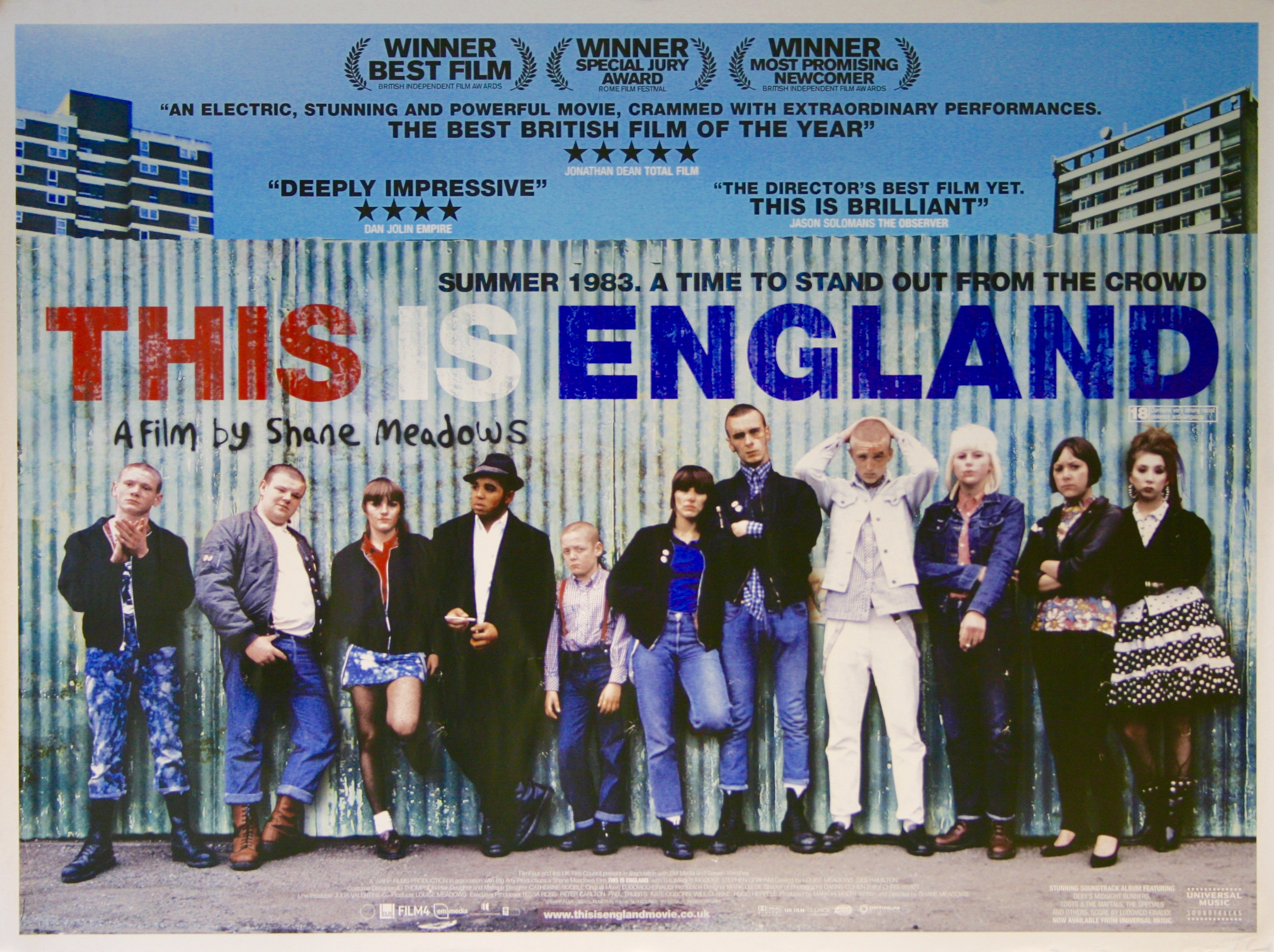
Image result for this is england poster

This is England - an example
This is England takes the point of view of a young boy who joins the skinheads in the 80s. There is cussing throughout (C-word and F-bombs), and the climax involves a violent race-based assault. Although the message of this film is condemning this kind of violence, the brutality of it would be too difficult for a 4 quadrant audience to digest.


...
Digitisation, Disruption and Convergence:


  • As technology is constantly advancing, production, distribution and exhibition are becoming increasingly cheaper and more accessible to more people - expensive reels no longer have to be bought to make films, and even our production has been made digitally.

This allows films with micro-budgets to have a greater chance at distribution - Le Donk and Scor-Zay-Zee is an example of this, with a micro budget it still managed to have a theatrical trailer and then a straight to DVD release. Professional equipment used was extremely limited.

An example which took it even further is Hinterland, which had a budget of only £10k, filmed using a 15 year old camera and then released in indie cinemas with director Q+A sessions. The film was never released on DVD, but given a simultaneous release on iTunes. The film definitely achieved some successful distribution, as it made it onto a top indie films of the year list.  

As it is so easy now for anyone to make their own films relatively inexpensively and self-distribute them, the term convergence is used to reference this: the line between producer and consumer is blurring as cheaper technology becomes available.

The importance of Netflix and Amazon Prime in this disruption cannot be overlooked, as they offer films directly to audiences, without theatrical releases, and are still massively successful. This threatens theatres, as if people are able to watch Oscar winning films such as Roma at home on Netflix, there will become increasingly less need/want for people to go to cinemas.

Although this disrupts conglomerates, it can be beneficial for indies, who are able to market and sell their films completely online, like the example of Hinterland, which did have a mall theatre run, but the majority of its marketing was one online through twitter.

...
How we would distribute our film:

Self-distribution would be a good method for the distribution of our film for some of the following reasons:
  • Do not have the budget for a theatrical release
  • No star billing
  • Digitisation has made it easier for creators to use innovative methods to cheaply promote their films
  • Darker themes as possibility for a high age rating significantly lower audience interest, making it more of a niche audience film
As we have a micro-budget for our production, it is unlikely that a large distribution company would be willing to help distribute our film. Due to the accessibility of social media however, getting in touch with a film festival has been shown to be possible, which would get the film viewed by critics and journalists who could generate discussion of the film in the press. We created twitter and instagram pages to promote our film, similar to Hinterland or the Cornetto trilogy, and the example of Coz Greenhop showed how successful a method this can be in generating interest in a film.

Making deals with arthouse cinemas to do director Q+A sessions which would be mutually beneficial, accompanied by a simultaneous Video on Demand/iTunes/digital release of the film has shown to be a successful method in promoting a film and achieving distribution (Wandering Rose, and Hinterland).

...
(SAM'S WORK)
...

...

This is Sam's online job interview covering the same topic
...

Wednesday, 6 February 2019

GENRE EG4 My Beautiful Laundrette (Working Title, 1991)

My Beautiful Laundrette poster
My Beautiful Laundrette is a social realist/black comedy film, and was made by Working Title before they became a subsidiary of NBCUniversal (when they were an indie company similar to Warp). The film is completely different to the kind they make now, with the plot following the (eventually) romantic relationship between Omar, a Pakistani living London and the street punk/squatter Johnny (played by Daniel Day-Lewis) as they become managers of a laundrette. (Wikipedia)


OUR INFLUENCES
  • Initially we were going to have the protagonist be in a mixed race gay relationship, but due to issues of casting we had to change this despite wanting to include non heteronormative representation to explore social issues surrounding the subject (more on this under the "other points" sub-heading)
  • The happy music that begins to play (which doesn't seem to fit with the genre) is something we want to avoid, as the example of Tyrannosaur uses incidental, acoustic music much more effectively and fitting with the genre 
  • The detailed shots of the set dressing for verisimilitude (similar to Withnail and I and Submarine)

...
PRODUCTION CONTEXT/HISTORY

PRODUCTION: Working Title, Channel 4 films DISTRIBUTION: Orion classics
BUDGET: £650k
BOX OFFICE: $2.5m
BBFC 15, MPAA R


  • the film was never intended for theatrical distribution
    • got it because of Channel 4's interest in the film
    • was screened in America
    • managed to make a (very large) profit
      BoxOfficeMojo
  • The BBFC gave this film a 15 rating - but how justified is it?
    • There is cursing throughout
    • there is a very graphic and realistic looking shot of someones skin rash
    • lots of drinking
    • In one scene a woman takes her shirt off and her nipples are censored or covered in any way through framing (there are scenes like this between Omar and Johnny where nether are wearing many clothes, but it is often the case that female nudity is more likely to be censored/sexualised)
    • The interesting point is the violence: there isn't any graphic violence, or shots of realist looking wounds, and in the climax of the film a car is destroyed followed by a brawl in the street. In the example of This is England the fight scene at the end has graphic shots of Milky's bashed up face, with lots of blood - much more extreme than My Beautiful Laundrette - but the amount of violence and swearing in both of these films is nothing compared to the mindless and graphic violence you see in many WT productions, such as Hot Fuzz (which includes someones head being speared by a model church spire, someones head being crushed by a piece of falling building, someones hand being stabbed and many more) which also was given a 15 rating.
  • 1988 Margaret Thatcher passed a law which banned the 'promotion' of homosexuality in schools and by local authorities (Local Government Act 1988, Section 28)
    • lead to a general avoidance of non-heteronormative representation and the propagation of homophobic sentiment in a lot of media
    • Thatcher's homophobic sentiment was largely emboldened by the 1980's AIDS/HIV crisis
    • this film was subsequently politically controversial 
  • Marketing strategy:
    • in the US trailer the film is portrayed mostly as a comedy in hopes of being more successful at the box office
    • there is also no reference to the homosexual content in the trailer (they refer to the relationship between the two main characters as "a partnership of 2 young entrepreneurs", and include a scene of one protagonist kissing a girl)
    • lots of neon lights were used 
      • made the film look more upbeat/comedic

  • Low-key lighting used throughout the film
    • part of social realist genre but also signifies low budget
  • Hand-held cameras
    • reflective of the British Documentary Movement
    • also signifies low budget
      • adds to realism

...
TITLES


  • The titles don't fit at all with the genre
  • The white serif font is similar to what was in other films (Withnail and I, Tyrannosaur, This is England), but the animation is very different to any of the other examples 
  • The jokey washing machine animation really doesn't much sense as it does not signify the genre, and there is only a small a comedy aspect to the film
  • All these could be a part of the hybridity aspect in hopes of making the film more marketable (similar to the misleading US trailer)

...
MISE-EN-SCENE/FIRST SHOT


  • First shot:
    • not an ELS
    • is immediately grim, no grand image
    • immediately the action begins - adds impact, reflective of the violence which pervades the film 
      • also follows Barthes action codes, very similar to in '71
    • the furniture is old, cheap looking, dirty
    • blocking the door
    • not fancy
    • walls are decaying (similar to in This is England)
    • low-key lighting 
      • first shot
      • immediately signifies poverty/social realist genre


  • Props:
    • the mattresses do not have sheets on them
    • neither do the duvets
    • multiple mugs are on the floor
    • protagonist uses a black bin bag to pack his (very few) belongings
      • all adds to verisimilitude
      • connotes poverty (makes sense as you find out they are squatting in the abandoned house)
      • 2nd shot (mattress, costume, protagonist in foreground)
        wearing a coat but no shirt
      • mugs/rubbish for verisimilitude
  • Costume:
    • character asleep on the chair is wearing a large coat to sleep warm
      • the fact that he's asleep on a chair rather than in a bed in the first place is a part of mise-en-scene
    • clothes are all worn and dirty looking
    • one man is wearing a large coat with no t-shirt underneath 
      • prioritised keeping warm
    • protagonist's jeans are ripped
      • may be purposefully to signify he is a rebel/punk
      • may be to show that he cannot afford new ones
        • could be both

...
PROTAGONIST


  • how he is anchored as the protagonist (in the opening only, the 2nd protagonist is introduced later):
    • shown in MCU high angle 2 shot in 2nd shot
      durable jacket, bleached hair, packing
      clothes in a bin bag
    • is closer to the camera 
    • is the first person you see
    • camera follows protagonist and cuts back to show his reactions
    • also uses varied focus to keep shots of him clear for longer than other characters
    • one of the first characters to speak
    • is on-screen for longer than any other character
  • costume/hair
    • the ripped jeans make him look like a rebel, but also suggest he might not be able to afford another pair
    • is wearing two pairs of trousers to keep warm (further signifying poverty)
    • oversized jacket (on top of a t-shirt and jumper) with the collar turned up
      • connotes rebelliousness/non-conformity 
      • is a durable jacket (made to last), part of a 'fashion' statement but also suggests he does not have enough money to regularly by more 'trending' clothes
      • the layers signifies poverty (is a squatter, so he can't be assured he'll have a warm place to sleep)
    • bleached hair
      • is not bleached at the roots (suggests it has been a while since he last did it/can't afford to get it done again)
      • signifies rebelliousness
      • shows he does pay attention to his appearance/artificially changes it
        • may be part of the non-heteronormative representation as it is stereotypical of gay men to pay more attention to their appearance (though there is no explicit gay content in the opening)
  • Actions/dialogue:
    • tells another man staying in the house to get up because they are being raided, and then physically hauls him off the ground
    • when leaving the house he walks in front of the other man
      • establishes the protagonist as the 'leader' of this group
    • has a northern accent
    • throwing his bag out the window 
      • does conform to stereotype that associates northern accents with poverty/lack of education (he is homeless)
      • also conforms to stereotype of northern English focus on community (wakes up his friends when police arrive rather than just leaving without them)
    • throws his clothes/belongings out of the window
      • they are not very valuable/breakable, no sentimental attachment 
    • This does change as the film goes on (character arc) as he gets a job and is given a place to live by Omar's uncle (realistic character arc/development)
      • part of the social realist genre, as the character is also forced to face up to his fascist, anti-Semitic past
      • non of this is seen in the opening though
  • These things a UK audience would be more likely to pick up on than an international audience
    • Stuart Hall's theory of readings: this reflects cultural knowledge and an element of preferred reading (similar to the banging of the bin lids in '71 as a warning for authorities), which makes sense as initially the film was never going to get an international theatrical release at all, so was made for a UK audience
...
SOUND; GENRE SIGNIFICATION


  • Though not explicitly stated anywhere, this film can be said to be a part of the emerging New Queer Cinema movement (coined in the 90's)
    • This emerged in a similar way to feminist theory in the 80's, focusing on turning societal shame into pride
    • Throughout My Beautiful Laundrette, Omar and Johnny have to repeatedly hide they relationship, and despite being rejected for it by the Tania character they continue to be together
    • The depiction of their same-sex relationship is unapologetic, and other characters are created as antagonistic/villainous (Propp's archetypes) in their disdain/disapproval
  • The happy music that begins to play with the titles does not fit at all with the genre, the scene or the rest of the film (but as stated earlier may be part of the hybrid aspect to increase audience appeal)


OTHER POINTS
  • To be clear, we did not intend to "straightwash" our initial idea, and we want to maintain the integrity of the social realist genre by exploring controversial themes in gritty, realist light, but now this will not include non-heteronormative representation (due to casting issues)
  • Although when My beautiful Laundrette "came out"... there was inherent shock value with it being not only a same-sex relationship, but also a mixed race one, a film with central queer representation would be far less radical today, though still controversial
    • a good demonstration of this is 2017's Call Me By Your Name, distributed by Sony and WB (2 of the Big Six), set in the 80's with the plot flowing the romantic relationship between a 17 year old boy and and the visiting 24 year old graduate-student assistant, Oliver. 
    • This film won 12 awards in total - a critical and financial succes
  • The other protagonist of this film (Omar, an young, enterprising anglo-pakistani) is not seen in the opening, but the casting of a '"model minority" in the lead marked a positive change in the representation of non-caucasians in film. Though the majority of representation is still caucasian and heterosexual, and this film was a low-budget indie production, it shows the importance of government funding (grants and the BFI) for more controversial films and the need for more diverse representation (also shown by the critical success of the film).
    • Although Omar is not shown in the opening, this maybe an attempt to initially make an audience more inclined to continue watching (through identification, but also the narrative enigma created in the first scene)


...

Monday, 4 February 2019

CONTRASTING STUDY: Grimsby (Working Title, 2016)

Grimsby poster
This is NOT a social realist film! We are, however, using this comedy (spy/action satire) to help us clarify the characteristics of social realist films: we'll contrast the media language of this with what we've observed is conventional for the social realist genre...

PRODUCTION: Working Title, Big Talk, Village Roadshow [US partner] +2 others
DISTRIBUTION: Sony (UK), Colombia (UK); [no China] 36 territories
BUDGET: $35m
BOX OFFICE: UK $7.5m, US $7m; World $25m
BBFC 15, MPAA R (quite high)


SOME CONTEXT: An example of the impact of the changed, reduced status of WT within its parent big six conglomerate, NBC-Universal. WT had been receiving $600m funding every 7 years, with clearance to greenlight any project up to a $25m budget - but that has been reduced to a 'first look' deal, meaning Universal can decide whether they want to 'pick up' a WT project or not. In this case they didn't, Sony (and its subsidiary Colombia) did ... and maybe Universal were wise, as it failed to even recoup its budget, never mind the 2-3 times budget generally accepted as needed to move into profit.

The Gant rule obviously doesn't apply: its a very British film - so much so that the title had to be changed for US and international markets as the place name Grimsby has no recognition and is essentially meaningless and confusing outside the UK (unlike London). 


...
IDENTS
  • Sony ident is the first
    • Big Six production
    • Very unlikely to see a Big Six name on a social realist film
  • Columbia
    • subsidiary of Sony
  • Village Roadshow Pictures
    • US production partner
    • virtually unheard of for UK social realist flick (unlike for comedy
  • WT did not get an ident
...
SOUND
  • Begins with famous song (R Kelly)
    • small indie companies do not have the budget to get copyright licenses 
    • non diegetic well-known commercial track as an audiobridge over idents to main scene
    • social realist films do not usually start with music (often have incidental music)
      • lyrical music is also uncommon for social realist
      • e.g. Tyrannosaur, but This is England has some
    • OST features Ed Sheeran!

...
FIRST SHOTS
  • Not ELS establishing shot
    MCU -back tattoo, sweat, beer can, football shirt
    • unusual choice of MCU
  • no fade-in (black screen before shot after ident 4)
  • Close-up of huge back tattoo ('ENGLAND' and 3 lions) 
    • football tattoo
    • sweat
    • beer cans visible in background 
  • Master shot
    • reveals scene to be a bed shop
    • Tightly framed shots for the opening sex scene are made comic by use of a master shot revealing the location
    • poverty is being signified by massive sale posters hanging all over the shop ('lowest prices in Grimsby')
    • very low prices $89.99 for a double bed
master shot - low prices, sale

...

REPRESENTATION
  • Stereotyping begins immediately
    MCU (cropped) - facial hair, scruffy look
    • overgrown hair and facial hair
    • sideburns
    • ridiculous tattoo
    • football top
    • beer can
    • and then reveal of moronic antisocial behaviour
  • Comparison to social realist:
    • The realism of social realist films can lead to showing antisocial behaviour
      • e.g. Tyrannosaur protagonist is violent, racist and unemployed
      • e.g. This is England swearing throughout, violence, underage drinking etc. 
  • Immediate heteronormativity 
    • opening sex scene
    • idea of male provider (the male protagonist is the one to say "we'll take [the bed]")
      • though this also signifies that he is the protagonist as it cuts back to his face/reactions

...
Is very short for an opening scene - contrast with This is England and Tyrannosaur etc.
just 30 seconds into the opening sequence which is then followed by another famous commercial song (Blur)

...
TITLES
titles
  • Serif font
    • shot 1 is typical of a social realist though
    • grim street red brick terraced houses, heavily graffitied
    • many houses are loaded up
  • Mise-en-scene
    • contrast to This is England - Shaun leaves his bike outside showing the community of the working class neighbourhood as he trusts it won't get stolen
    • Grimsby only shows the decay (harsh 2 dimensional stereotype of working class)

...